Background checks: where do you start?
The hardest part is rarely access to information. It is deciding what is relevant for this specific role, this specific risk profile and this specific hiring volume.
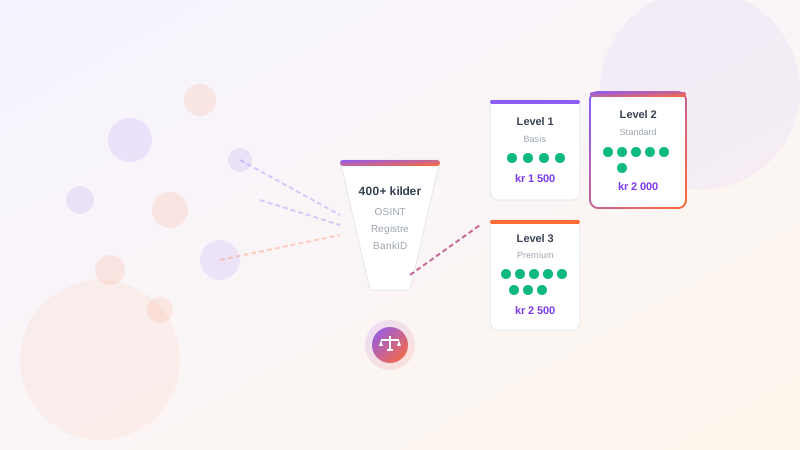
Too many sources is the real problem
In theory, a background check can cover identity, employment, education, credit, business interests, sanctions, open-source searches and much more. The challenge for most teams is not whether data exists, but how to decide which sources belong in a specific hiring process.
Without a clear framework, background checks become either too broad or too shallow. Both outcomes create risk: one for compliance, the other for hiring quality.
Start with proportionality
Norwegian privacy law and GDPR require checks to be proportionate to the role. A finance leader and a store employee do not create the same exposure, so they should not trigger the same control set.
That means the first question is not 'what can we check?' but 'what do we need to verify for this role to hire safely and fairly?'
Separate volume from scope
Approof’s model makes this easier because the subscription is based on candidate volume, not on buying one check type at a time. All checks can be available in the same agreement while the hiring team decides which ones to activate per candidate.
That keeps the compliance discussion where it should be: on relevance and justification, not on the fear of triggering extra line items for every check.
Build a simple decision path
A practical rollout starts with role risk. Define which checks are always required, which are optional for higher-risk roles and which only make sense when there is a documented need.
Then connect the process to your ATS or recruiting workflow so the right package starts at the right time and candidates receive a transparent consent flow.
What a safe first rollout looks like
For many teams, a good starting point is identity verification for all candidates, plus education or employment checks where the CV claims are central to the role. Credit checks and broader open-source searches should be reserved for positions where responsibility and risk clearly justify them.
The goal is not to check less at all costs. It is to check the right things, every time, for the right reason.
Not sure where to begin?
Book a demo and we’ll help you map the right setup for your hiring volume and risk profile.
Try for free